
Chinese Drivers Are Using Tiny Plastic Heads to Fool Tesla’s Autopilot Safeguards | WIRED
It begins with a small plastic figurine perched on a Tesla’s rearview mirror—Dwayne “The Rock” Johnson, shrunk to the size of an apple, with a fixed stare and rigid features. For thirty dollars, you don’t just buy a piece of pop culture…
Machine-translated from the German original by Maria.
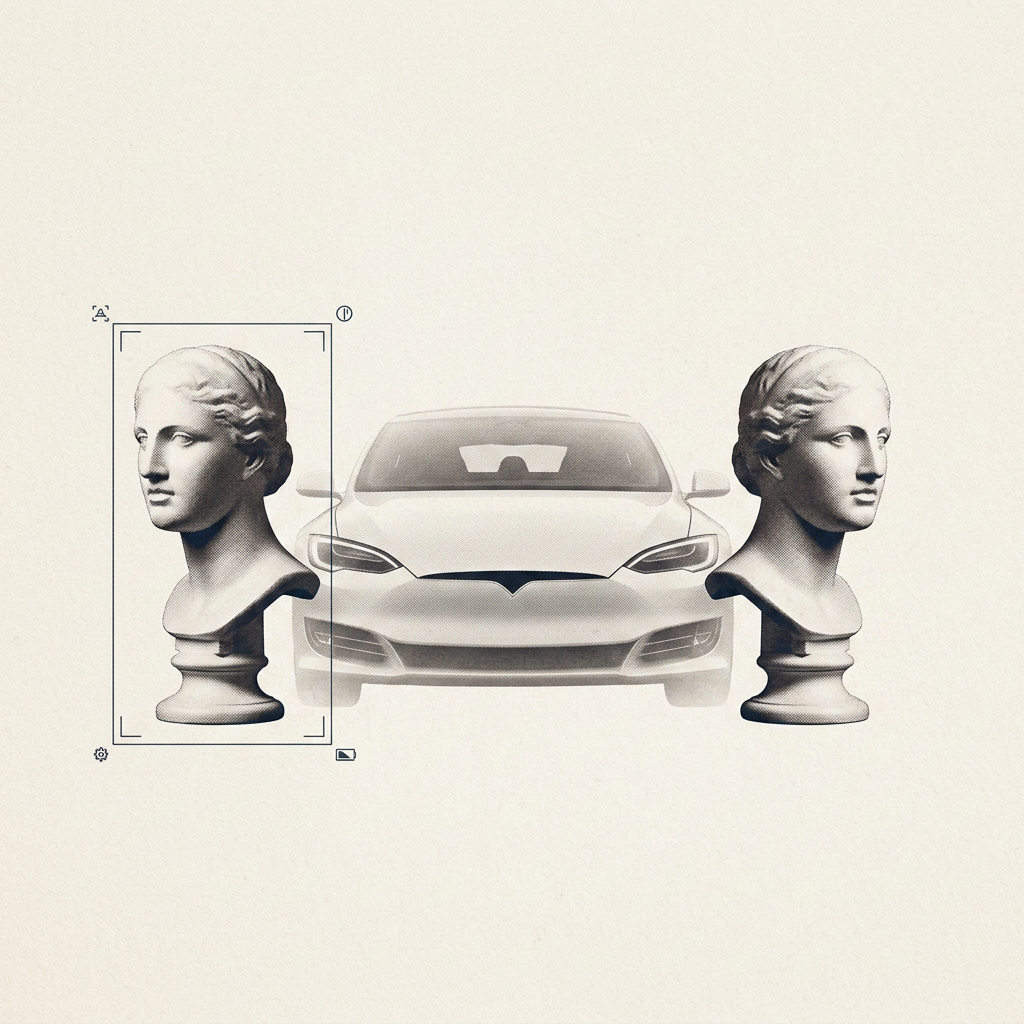
It begins with a small plastic figurine perched on a Tesla’s rearview mirror—Dwayne “The Rock” Johnson, shrunk to the size of an apple, with a fixed stare and rigid features. For thirty dollars, you don’t just buy a piece of pop culture, but the illusion of attentiveness. The software designed to ensure the driver keeps their hands on the wheel and eyes on the road is fooled by this cheap trick. The algorithm detects a head, registers an apparent presence—and relinquishes control. What’s happening here is more than a technical hack. It’s a quiet rebellion against a logic that redistributes labor without consulting those who must perform it.
The observation is simple: autonomous driving systems promise relief, yet they simultaneously demand a new form of surveillance. The driver is no longer supposed to steer, but they must not look away either. They become the guardian of a system that ultimately seeks to replace them. This tension isn’t a design flaw but a structural contradiction. The technology takes over the physical act of driving, yet it reserves the right to claim human attention as a backup—not as an equal partner, but as a stopgap. The human becomes redundancy, the last resort that must step in when the machine fails. But who guarantees they can do so after hours of merely watching instead of acting? The Chinese drivers resorting to plastic heads make this contradiction visible: they refuse to play the role of passive overseers without being paid for it.
The image that emerges is that of a factory floor where machines have long since taken over the work, while workers still sit at the control panels—not to operate them, but to press the red button in an emergency. Yet instead of wages, they’re given only the duty of vigilance. The autonomy of these systems isn’t liberation but a new form of discipline. The driver becomes the hostage of their own attention, trapped in a system that needs them but doesn’t value them. The plastic heads aren’t fraud; they’re a silent protest. They say: If you’re going to make us watchdogs, at least do so without the illusion that we’re still needed.
The crux lies in the fact that this dynamic isn’t limited to Tesla’s Autopilot. It’s a pattern repeating across every industry where AI and automation gradually take over tasks—not with a big bang, but through a thousand small shifts. The call center worker who no longer speaks on the phone but merely monitors the AI conducting the conversations. The warehouse employee who no longer packs but only intervenes when a robot drops a package. The journalist who no longer researches but only corrects algorithm-generated texts. The same logic everywhere: the machine takes over the work, the human is demoted to backup—without any change in power structures. Technology promises efficiency, yet it primarily produces a new form of insecurity. Who is still responsible? Who is liable? Who decides when the human must intervene—and who decides when the machine is overwhelmed?
The strategic question that arises isn’t technical but political: If work doesn’t disappear but becomes invisible, who negotiates the conditions? The Chinese drivers have provided an answer with their plastic heads—they refuse the role of silent guardians. But this refusal is individual, not collective. It’s a hack, not a contract. The real question is: How do we organize co-determination in a world where work no longer takes place just in factories and offices, but in the gaps between humans and machines? If technology turns us into backup forces, who negotiates the rules for this new form of labor? The answer won’t be written in Silicon Valley, but where people refuse to merely fill the gaps left by algorithms.